
In the draft rules, among 681 listed professions, armed security guards, supervisors, surveyors, and carpenters (class I) are proposed to be treated as highly skilled professionals; electricians, tailors and drivers are skilled; cooks and cobblers as semi-skilled and dairy coolies, office peons and sweepers as unskilled.
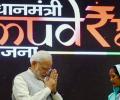
After taking benefit of the scheme, jobs increased by around 11 mn in establishments that took loans.

'One of the ways to do that is to ensure that NBFCs have got liquidity.' 'If we don't do that, this mood of gloom will continue.' NBFCs need to be provided with liquidity if they have to start lending.

Part of the dues has been pending since 1995-96 - the inception year of the Employees' Pension Scheme administered by the EPFO. The Centre also owes the EPFO more than Rs 1,000 crore towards the minimum pension scheme it had notified in September 2014.

The government would be ironing out issues related to the controversial 'bail-in' clause in the earlier Bill, explore hiking the deposit insurance cover of customers, and decide whether the resolution framework should apply to public sector banks.

PSBs have been requested to reach out to MSMEs to provide bill discounting to them against their dues since they suffer the most from shortage of cash.
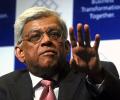
He said trust and confidence were the backbone of any financial system and one should never underestimate the power of ethics and values.

Senior bankers are trying to impress upon the central bank that the shift to external benchmark-linked lending be postponed to April 1, 2020.

According to draft Code on Social Security, 2019, gig and platform workers will be entitled to life and disability cover, health and maternity benefits, among others.

PSB chiefs tried to argue that liquidity is in surplus in the system and the problem was related to lack of demand in the economy, instead of banks' reluctance to lend, but 'the FM said it is a perception issue that loan is not available, which we need to dispel,', reports Somesh Jha.

The NDA government will be following the footsteps of its predecessor, the UPA, which had introduced the concept of "loan mela" to boost credit by directing banks to lend to people through public meetings.

In the latest draft of the Code on Social Security Bill, 2019, the government has decided to stick to the current thresholds for providing social security benefits to workers by industry.

The government is set to ask PSBs to expeditiously introduce repo-rate linked products "to step up affordable credit".

Banks are also weighing the option of hiring experts for help in specialised areas.

The government wants to reduce the rate of contribution - part of the employee's share - for a class of workers depending upon age, income or gender, without changing the contribution from the employer's share.

Under the proposed mechanism, the finance ministry has said banks will notify customers when someone tries to deposit money in their accounts, a government official said.

The Bill states a worker will be paid twice his or her wage if he or she is allowed to work overtime. A majority of workers in India worked more than 48 hours in a week, which is higher than the International Labour Organisation's prescribed time-limit.
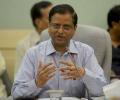
Garg had refused to sign on the report finalised by the former Reserve Bank of India governor Bimal Jalan-led committee reviewing the central bank's economic capital framework (ECF).

Single registration will be coupled with single licence, along with a single return, for executing projects for five years.

Under the New Code on Wages Bill 2019, employers will be required to give the minimum wages, notified by either the state or the Centre, to the unorganised sector, too.
 © 2025 Rediff.com - Investor Information - Advertise with us - Disclaimer - Privacy Policy - Sitemap - Feedback - About us - Terms of use - Grievances